Falkirk Flight Upgrade and Gate Replacement Programme - Extension
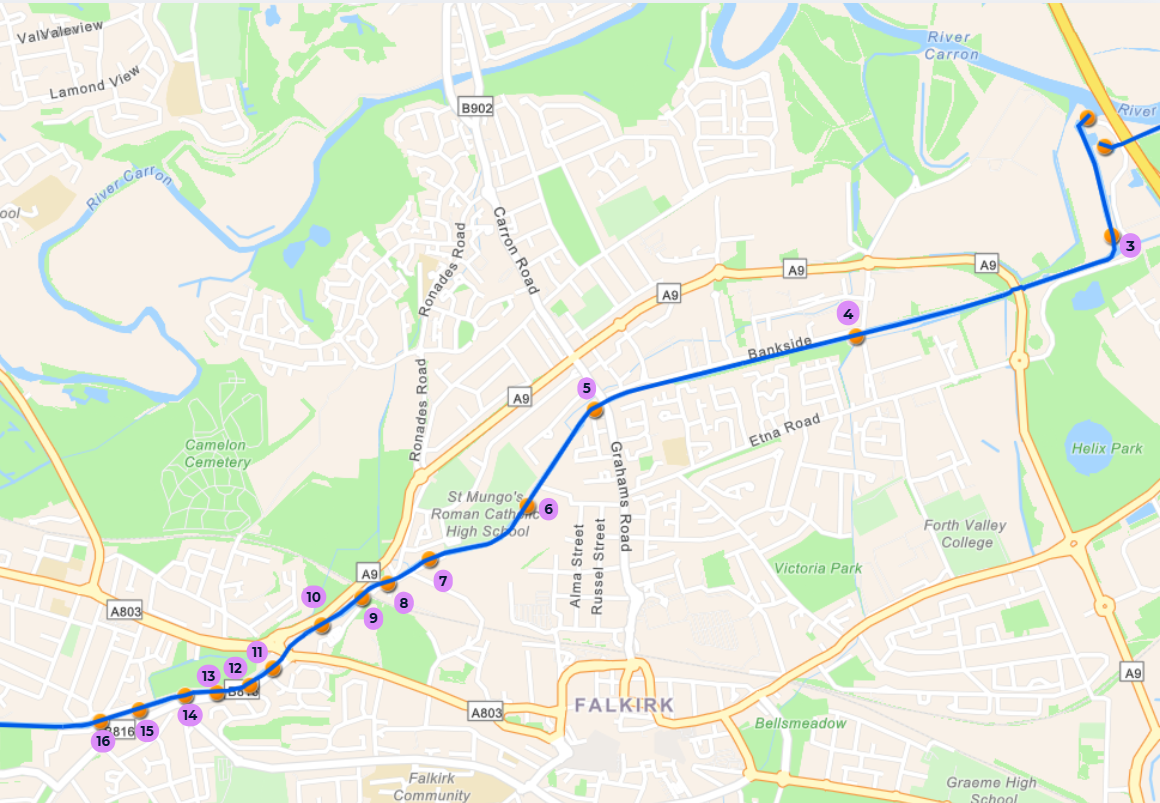
Location: Forth & Clyde Canal, Lock 3 (Grangemouth) to Lock 16 (Camelon)
Extent of project site: Approximately four kilometres with the site compound at the Union Inn car park close to Lock 16
Duration: January 2025 to 23rd April 2027
Information for boaters
Please note that navigation between locks 3 and 16 is now suspended until 23rd April 2027. If you have any questions about the upcoming works programme and impacts upon moorings, please contact our Moorings Team direct at moorings@scottishcanals.co.uk. For questions about impacts on navigation, please contact Enquiries@scottishcanals.co.uk
Overview
Twenty-five years ago, a momentous civil engineering project rescued Scotland’s Lowland canals from dereliction. Using an investment from the National Lottery, the Millennium Link project refitted the Forth & Clyde Canal and restored the historic link to the Union Canal.
Since then, the canal network has brought in billions of pounds in investment, enabling the development of major attractions: The Falkirk Wheel, Stockingfield Bridge and the Kelpies. They are playing new roles in our society too through initiatives like the Glasgow Smart Canal which provides additional drainage solutions for brownfield sites, freeing up space for 3,500 new homes in the affordable and mid-range category in the north of the city.
While the Forth & Clyde Canal is now a thriving space, by the start of 2024, our inspections revealed that the infrastructure along the Falkirk Flight required extensive upgrades, repairs and gate replacements. The old oak lock gates installed on the Falkirk Flight during the Millennium Link project were deteriorating badly: the downstream gates needed replacement, and the upstream gates needed repair. Upgrades were needed along the length to improve water controls, repair crumbling masonry, and carry out repairs within the canal bed.
The current engineering programme is the biggest on our network in 25 years, representing a major investment in the future of our Lowland canals.
First phases of the programme – 2025/2026
Dewatering of a 4km stretch of the canal
Dewatering and rewatering of a canal section is a laborious and slow task. Towns like Falkirk have grown up around the Forth & Clyde Canal over several centuries, making the canal an essential part of water management and drainage in the area. Dewatering of the canal began in February 2025 and progressed over several weeks, as our water controls team stabilised and monitored impacts on water levels along the canal and worked to prevent leakage. A final stage was relocating any fish left behind in a channel at the base of the canal before the canal was fully drained.
Replacement of nine sets of downstream gates at locks 7, 9, 10, 11, 12, 13, 14, 15 and 16
Downstream gates experience greater loading than upstream gates and tend to require replacement earlier. They hold back the full volume of water in a chamber when it empties –creating an enormous force that distorts and twists their structure over time. More silt and abrasive materials collect against them too, wearing down seals; while turbulent water from the sluices scours their surfaces. Collisions from vessels occur more frequently too as they pass to the lower water levels. We chose ekki hardwood (sustainably sourced) for the new gates. This is a far more durable material than oak and will extend the lifetime of the gates from 25 years to 35-40 years. At the heavily used Lock 16, gates, we chose the even more robust solution of steel for both the upstream and downstream gates due to the length of pound these gates hold back.
Re-planking and repairs to upstream gates along the Falkirk Flight and replacement of the upstream gates at Lock 16
Our inspections have shown that, as expected, the upstream gates along the Flight have suffered less wear and tear and are in better condition than the downstream gates. Only the upstream gates at Lock 16 required a full replacement at this time. Our maintenance team have also used the time when the canal has been dewatered to remove life expired lock gate planking and replace with new planking, which will extend their life expectancy up to 10 years.
Installation of a lock bypass at Lock 16
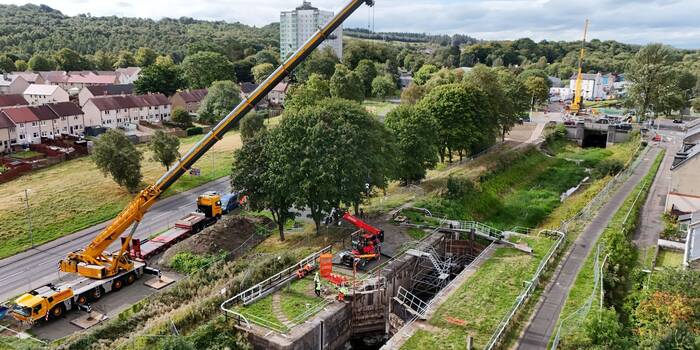
One of the most challenging parts of the programme was the excavation and installation of a bypass channel around the busy Lock 16 and road bridge. Bypasses are increasingly being used as a way of exercising better water controls along the canal, something that is becoming particularly important as extreme weather and droughts affect canals across the UK (and globally).
Masonry, structural and mechanism repairs along the Falkirk Flight
While the canal has been dewatered, we have had a rare view into the channel and infrastructure. The historic masonry, including the quoins (or corner grooves that hold the gate mechanisms), embankments and mechanical parts of the gates and locks have also undergone extensive repairs.
Extension of the project
When we designed the programme for 2025/2026, we had a limited view of the canal. With the canal dewatered, we have also had the opportunity to conduct detailed inspections of assets normally submerged under water. This has revealed more work to do, including further gate replacements and repairs, and a series of other works along this stretch of canal.
With the end of the project set for August 2026 and a growing list of gates and repairs needed along the canal, we had a decision to make. We could re-water the canal only to return within a year or two and dewater once again to conduct the additional repairs and gate replacement. This would be a costly choice that would bring disruption to the community and boaters for longer. The alternative was to keep the canal dewatered until 23rd April and capture all the additional and urgent gate replacements and repairs into this one period.
The extended scope includes:
- Replacement of downstream gates at Lock 4 (Abbots Road). With a 26 week lead time for gate manufacture, new lock gates are scheduled to arrive in February 2027. Lock 4 top lock gates will old life expired planking removed and re-planked.
- Replacement of the upstream gates at Lock 13. The gates are significantly decayed and would be at risk of failure in the near future without replacement now. We will use a more robust hardwood timber than the traditional oak this time around.
- Repairs to the historic masonry quoins (the curved recesses where the gate mechanisms operate), replacement of mechanisms, re-planking of upstream lock gates, and repairs to masonry and embankments along the length of the canal.
- Clean-up and rewatering of the canal, a process that takes many weeks and involves continuous monitoring and adjustment of water controls along the canal. Our Operations Team will also need to conduct dredging and sediment removal at the two sea locks.
Click to open image in full-size view
Latest Updates
Saturday 15th August
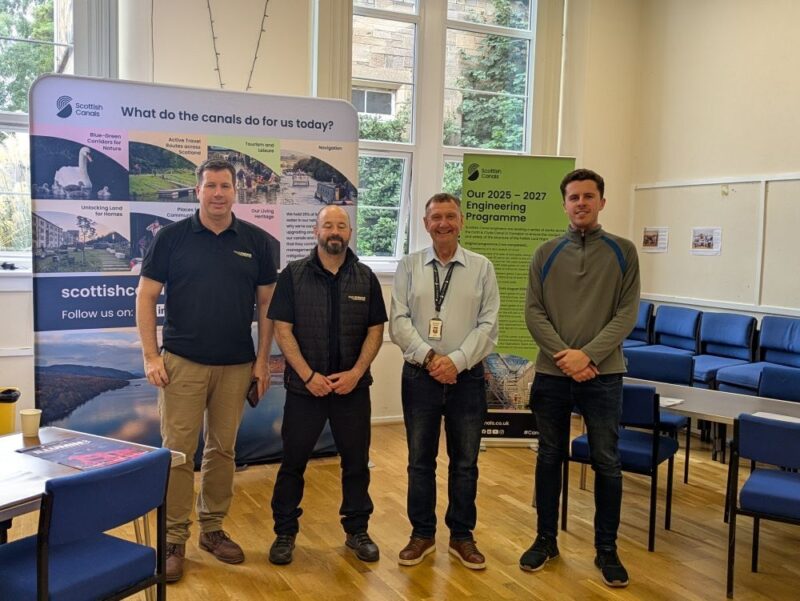
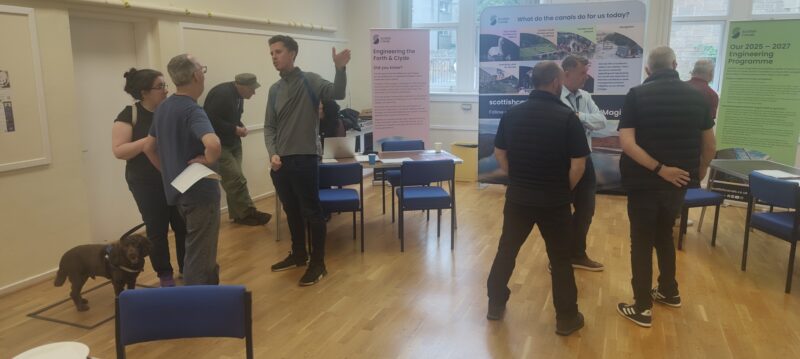
Thank you to everyone who attended our Community Pop-In Day at Camelon Community Centre! We had a good attendance from members of the community with plenty of questions about the project and the next steps. If you were not able to attend on the day, you can find our contact details and answers to some frequently asked questions below.
Enquiries
If you have any questions or concerns, please contact us at enquiries@scottishcanals.co.uk or on 0141 332 6936 (Monday to Thursday 8.30am-5pm, Friday 8.30am - 4.30pm).
Other ongoing projects in Camelon, Falkirk
FAQs
Why is the project being extended again?
There are three reasons why we have had to extend the original scope of work beyond that envisaged in 2024.
- We have had a full access to normally submerged infrastructure and identified additional defects requiring intervention within a few years. To leave site now, only to return again within a short time, would increase costs of repair significantly. Packaging all upcoming work into this programme was the most cost-effective solution.
- By extending the current works, we can reduce the likelihood of further prolonged canal closures over the next decade. Replanking of those gates that are degrading but not yet set for replacement is one way that we can extend the time between the next major repair programme.
What will be the impact on moorings customers and the boating community on the Forth & Clyde Canal?
You can view our network map on our homepage and below to see live updates about the status of navigation on Scotland’s canals. The Forth & Clyde Canal has two major stoppages this year: from Bowling to Lock 21 (Maryhill) due to emergency works on the Kelvin Aqueduct and the Falkirk Flight programme from Lock 3 (Grangemouth) to Lock 16 (Camelon). Please contact the moorings and customer teams to discuss navigation and arrangements for your vessel.
Moorings Team: moorings@scottishcanals.co.uk
General enquiries about navigation: Lowland.canals@scottishcanals.co.uk
Why do you need to drain such long stretches of the canal for the Falkirk Flight and Kelvin Aqueduct works?
While the works at the Kelvin Aqueduct are confined to the structure itself and along to Lock 25, we need to suspend navigation all the way to Bowling Harbour (the harbour remains open for moorings only).
This is because of the way that water controls are implemented along a canal of this age: the canal’s summit pound stretches across 60 miles, being fed continuously by our supply reservoirs and burns. Managing water levels along the length of the canal requires a team of water control experts working around the clock to monitor levels – while the canal is dewatered for engineering works (planned and emergency), it is not possible to maintain the stretch from Bowling to Lock 21 at levels that are navigable.
Will your contractor still be on site in the Union Inn car park at Lock 16 in Camelon?
On 19th August, the site compound will move from its present location in the Union Inn car park in Camelon to Lock 4 (Abbots Road).
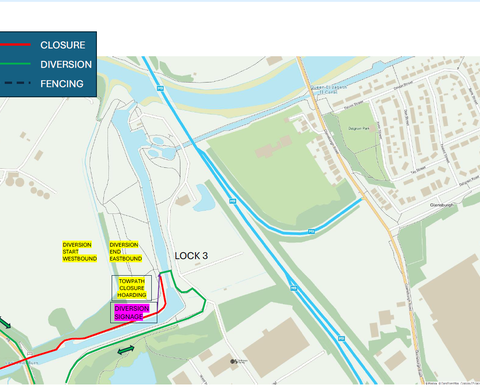
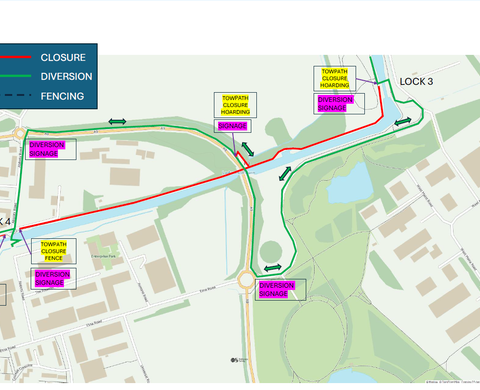
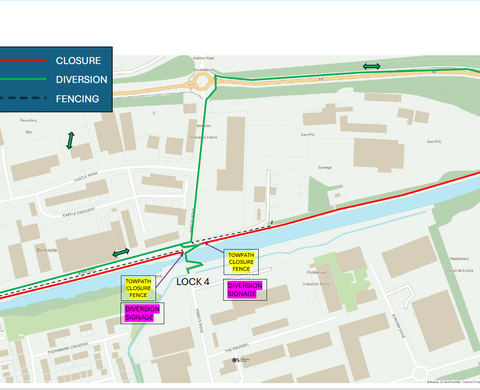
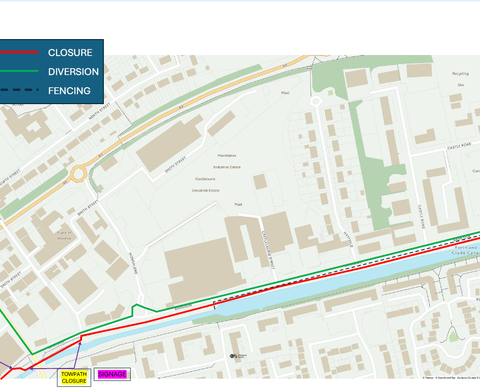
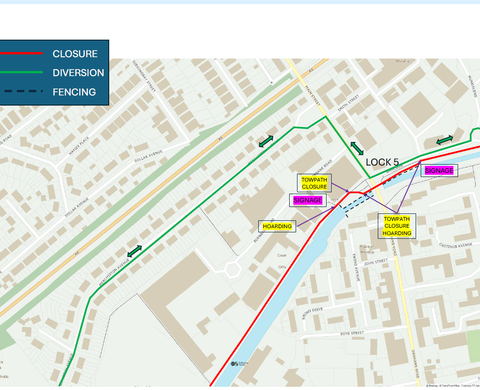
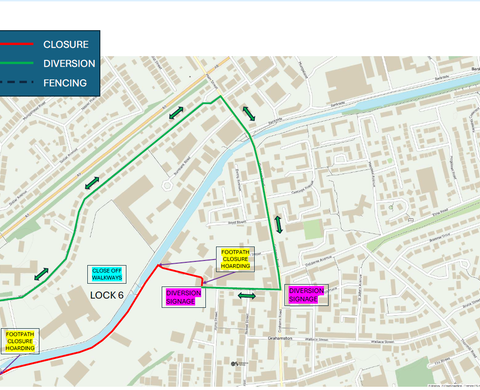
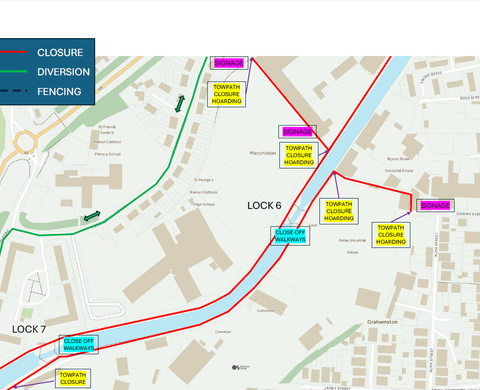
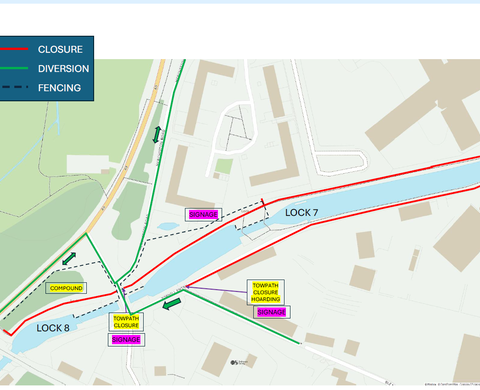
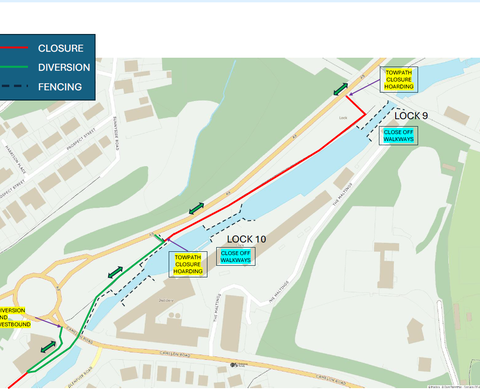
Towpath diversions are signposted on the spot and reference maps are below.