
Inspections and repairs of the Kelvin Aqueduct, Maryhill, Forth & Clyde Canal
Location: Kelvin Aqueduct, Maryhill
Navigation suspended: From Bowling to Lock 25; Bowling Harbour remains open
Duration: February 2026 to 1st March 2027
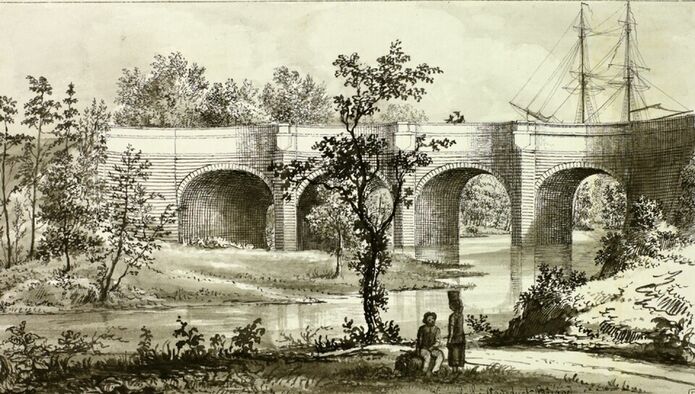
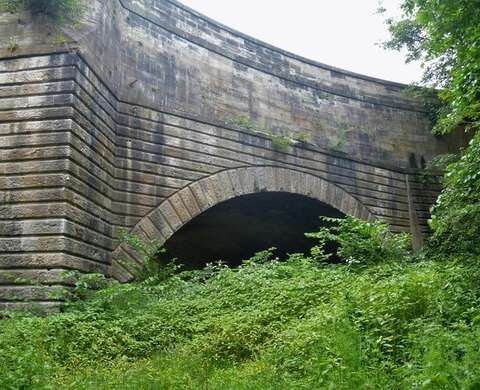
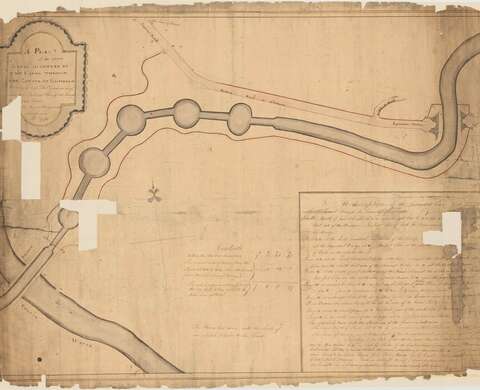
The Kelvin Aqueduct is an outstanding piece of canal engineering. At the time of its construction, more than 230 years ago, it was Britain’s largest aqueduct and a prototype for many later structures built on Scotland’s canal network.
To this day, it continues to carry the Forth & Clyde Canal across the deep valley of the River Kelvin, allowing boats to pass over the river on their way between the Firth of Forth and the Firth of Clyde.
Like all historic infrastructure, the aqueduct requires ongoing maintenance to manage the effects of natural weathering, water leakage, and the self-seeding of vegetation within its masonry. Read our blog about the historic finds on the aqueduct this year
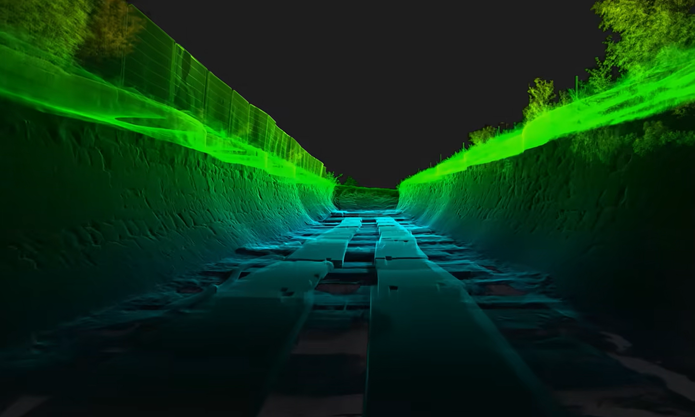
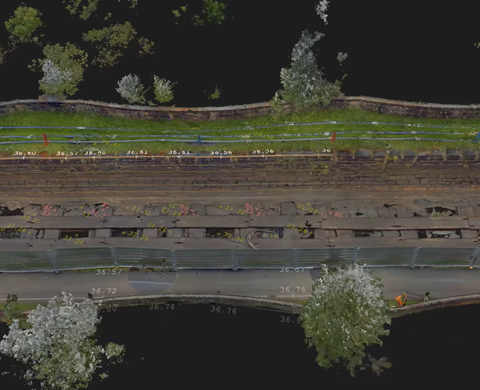
The 236-year-old structure, which carries the Forth & Clyde Canal over the River Kelvin, began to leak towards the end of 2024. Since that time, we have dewatered the aqueduct’s trough, desilted the base of the trough, and conducted in-depth investigations of the structure, including building a digital twin.
The work has been challenging, with ingress of water into the trough on multiple occasions and much to learn about the structure which has been submerged underwater.
We have found out a lot about the approaches to design and construction used by the aqueduct’s 18th century builders, led by visionary engineer Robert Whitworth.
Part of the process of designing a permanent repair programme is to agree the approaches to works with Historic Environment Scotland (HES) and to obtain consents for the works.
The aqueduct is a listed structure, as well being a crucial operational asset on our network. It is also an important monument to Scotland’s outstanding history of civil engineering leadership with a lot to tell us about our heritage and past. This means that repairs and additions need to be sympathetic to the existing structure.
With this process now completed, we are embarking upon the repair phase of the programme.
Repair Programme
The repair programme will run to 1st March 2027, the date when we intend to have completed all repairs and rewatered the canal ready for resumption of navigation.
Works will comprise:
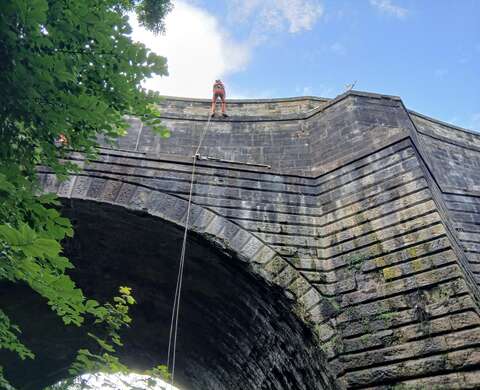
- Removal of the trees and vegetation from the underside and external walls of the structure (already begun) by rope-access technicians.
- Installation of anchorage points to simplify future maintenance and vegetation removal.
- Repointing the masonry to stop the leakage routes through the structure.
- Bentonite grout injection – this involves pumping a clay mix into the masonry. The clay swells in contact with water to block leaks, remaining soft enough that it is unlikely to dry out and crack at a later date.
- Re-instatement of the puddle clay liner.
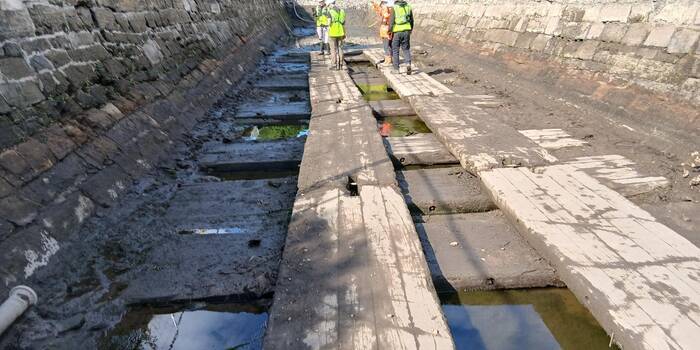
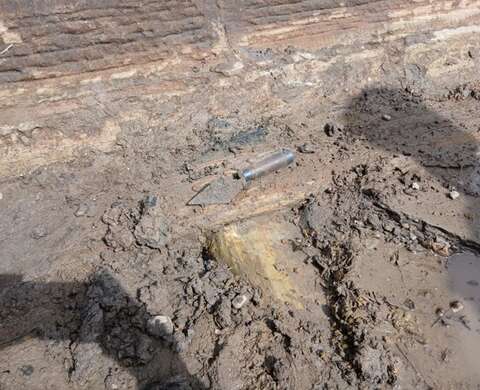
- Conservation works to protect the historic timber structure discovered at the base of the aqueduct trough (which we believe was designed to protect the puddle clay from the deep hulls of the original sailing ships that passed through the aqueduct).
- We also hope to Install stop plank grooves for temporary damming of the structure in the future, which will be a less disruptive way of working on the aqueduct.
Progress of Repair and Towpath Diversion (October/November)
At every stage of the Kelvin Aqueduct inspection and repair project, we have tried to plan works so that the towpath remains open to the public. Due to the nature of the repair works coming up on one section of the aqueduct, we have decided that a towpath diversion will be needed for some weeks in the interests of public safety.
During the initial repair phase of the programme, our contractor Mackenzie Construction has so far:
- Installed a temporary clay dam and access track to the trough
- Fish relocation
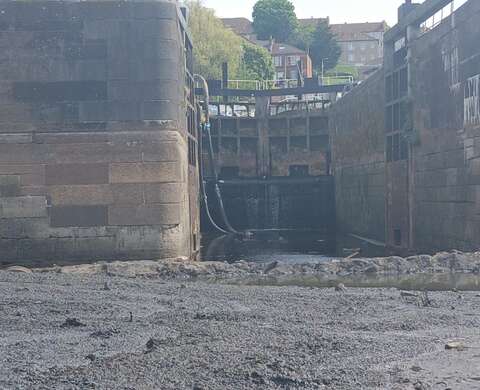
- Dewatered including overpumping beyond the temporary dam to maintain flow to Bowling
- Desilted the trough working area taking great care not to damage the original timber shoring
- Gently power washed the trough masonry
- Installed permanent anchor points for rope access maintenance for normally inaccessible parts of the structure
- Cleared vegetation from the aqueduct’s masonry, including trees at the base to allow safe rope access from the parapets and walls of the structure
- Begun repairing the damaged and worn sections of masonry
- Replaced badly damaged masonry blocks with reclaimed blocks from a contemporary demolition site.
- Begun repointing masonry within the trough.
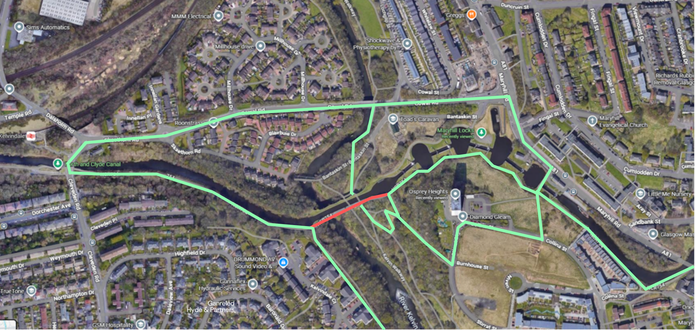
One section of the aqueduct trough wall has deformed over the decades to the point that it will require to be carefully taken down and rebuilt. This will allow us to work safely and reduce the risk of overhead blocks falling. The area in question supports the towpath adjacent to the temporary dam.
You can see this section marked up on the map below together with the towpath diversion around it, which will allow for a safe working space for our contractors and ensure that construction activity remains well away from areas used by the public.
The section of wall is over six metres in length, and we can see evidence of historic repairs to it (although those records have not come down to us). The historic repairs will be at risk of failing at a future date, and this section of wall is now becoming a weak point in the structure. For this reason, we have added a full rebuild into the scope of work.
Our approach, consented by Historic Environment Scotland (HES), is to use the original stone where possible and lime mortar to a specification that has been supplied by the Scottish Lime Centre Trust and is a close match to that used by the 18th century builders.
Towpath Diversions in Maryhill, October and November
A towpath diversion will be in place from Monday 19th October until Monday 30th November. While we have planned the diversion for a period of six weeks, we will re-open the route earlier if we are able to complete the work more quickly than anticipated.
Please see the diversion route below, and we will have signage on the spot too.
Past Project Updates
Monday 5th October - noise from temporary pump
We apologise to local residents for the current noise from a replacement pump. One of our silenced pumps broke down at the end of last week, and we are using a replacement pump for the time being, which does create some additional noise. We anticipate that a new, silenced pump will be installed by our contractor tomorrow morning.
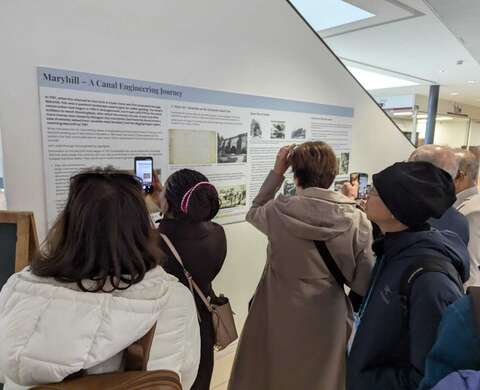
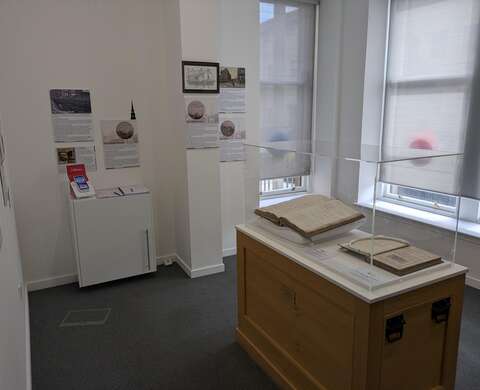
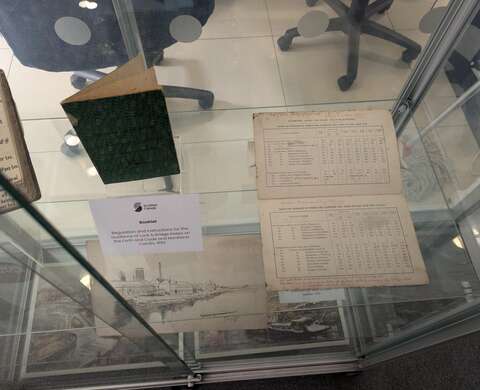
Public Exhibition - Canal Engineering in Maryhill
We recently held a joint exhibition running with the venue up to 11th October 2026.
Update - Tuesday 23rd June
Over recent months, we have worked with Mackenzie Construction to dewater the aqueduct and undertake extensive inspections of the condition of the trough and masonry.
With the inspections completed, we are now:
- Developing the long-term repair plan to stop the leakage from under the archways;
- Conducting non-destructive testing of the current mortar to understand its condition so that we can choose the best material for regrouting.
- Working with Historic Environment Scotland (HES) to agree the approaches we will take to repairs and obtain the necessary consents. Both the aqueduct and canal are Scheduled Monuments. This means that we need to obtain special consents for repairs (unless they fall under a pre-agreed list of works).
- Clearing vegetation and mortar from the aqueduct’s trough.
26th March - Overnight pumping
While we dewater the canal and stabilise water levels, we are running pumps overnight. We are revising our temporary dam design and options for moving water downstream, and we are looking for opportunities to switch to a gravity feed later in the programme to reduce the need for pumps. Thank you for your patience with the works and the overnight pumping while we resolve this issue.
20th March - HES visit
Historic Environment Scotland (HES) made an initial visit to record and catalogue the assets exposed during dewatering. Further visits are planned by HES and our own Engineers, Consultants and Contactors are all keeping records of progress, structures and conditions
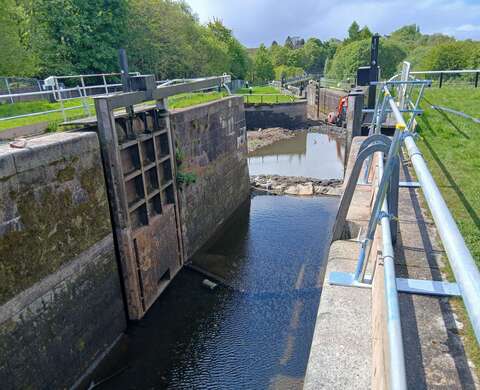
26th February - Fish relocation
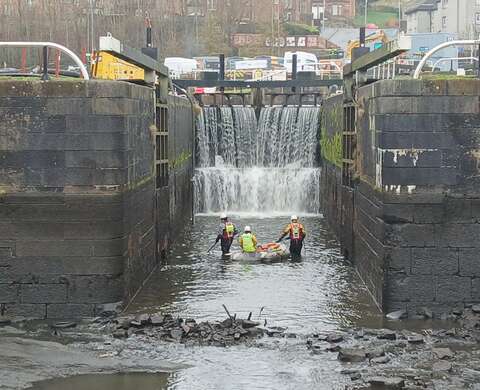
The fish relocation, conducted by APEM, is now completed . Fish have been moved from here to other sections of the canal ahead of the full dewatering and engineering works.
FAQs
Why is navigation on the canal suspended all the way from Bowling?
We have had to suspend boat movements from Bowling for the duration of the works as the dewatering of the stretch around the Kelvin Aqueduct means that we will not be able to guarantee sufficient water for boat movements along the length of the canal.
How long will pumping go on overnight?
Pumps have been installed on the canal to remove excess water from the dewatered section and the aqueduct trough. To reduce noise for local residents, we have installed sound barriers around the pump units.
I need to get through Kelvin Aqueduct to get to my home mooring. Is this going to be possible?
This will not be possible while works are ongoing. Please contact our Moorings Team to discuss arrangements for your vessel.
Will the Bowling Sea lock be operational?
Bowling Sea Lock remains operational but there may be some temporary restrictions to navigation. Please speak to the Lowland Canal Team before making plans.
How are water levels at Bowling going to be maintained?
We will continue to manage and monitor water levels along the canal, and we will update you if we anticipate any change in draft. If you experience any issues, please contact the Lowland Canal Team.
How will the weeds at Bowling to lock 37 be managed during the closure period?
Weed management will continue from Bowling to lock 37. Prior to re-opening navigation there will be a full length cut.
Can boats be lifted out/in by crane at Bowling?
There is a restriction on the size of vehicles that can cross the rail bridge at Bowling. If you need to enter or exit the canal, please contact the Lowland Canal Team to discuss your options.
Will I be compensated for the inconvenience of not being able to navigate?
For those who remain at Bowling and Temple Wharf during the closure, we will apply a pro-rata credit to navigation licences from May 2026 until navigation is re-opened.
How can I remove my boat if I decide to give up my mooring during the closure?
If you are considering leaving the canal network before navigation re-opens, please contact the Moorings Team to discuss your options.
Where can boats be lifted out/in at other locations on the Lowland canal network?
Boats can be lifted in/out at the following locations:
- Union Canal: Hub 8 at Calders Cresent, Edinburgh. Stewartfield Slipway Broxburn.
- The Falkirk Wheel: Plaza area.
- Forth & Clyde Canal: Auchinstarry, Firhill Basin, Drop Lock area.
Please contact boat movements or the lowlands customer team to discuss options.
Will I be permitted to sell my mooring with my boat?
Moorings cannot be sold along with a boat. If you are planning to sell your boat, please contact the Moorings Team.
Contacts
Please direct enquiries to the Kelvin Aqueduct Project Team at: enquiries@scottishcanals.co.uk, or call us on 0141 332 6936 (Monday to Thursday 8.30am-5pm, Friday 8.30am - 4.30pm).
If you have any questions related to a mooring, please contact moorings@scottishcanals.co.uk
For any other boating enquiries, please contact lowland.canals@scottishcanals.co.uk, 07810 794 467