
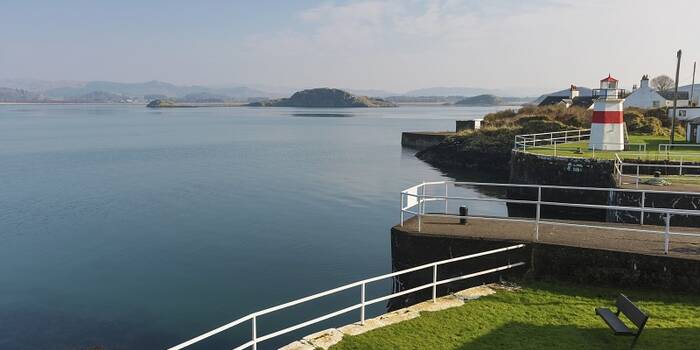
Scotland’s canals were the catalyst for the development of many of our urban centres, local industries and rural settlements. As such, they remain vital infrastructure assets, playing a deeply embedded role in drainage and water management across both Highland and Lowland landscapes.
As custodian of the canal network, Scottish Canals is responsible for anticipating and responding to the future of climate change. Protecting this historic infrastructure means planning for a future shaped by more frequent extreme weather, taking into account the many economic, environmental and social benefits the canals continue to provide.
Our canals are not just heritage assets to be safeguarded, however; they also have an important role to play in helping communities adapt to climate change. By reimagining how the network is used, we can unlock new opportunities to reduce flood risk, manage water more effectively and build resilience.
Glasgow’s Smart Canal is a prime example of how this can work: in a European first, the Forth & Clyde Canal can lower its water levels by four inches across a 20-mile stretch, soaking up surface water and providing additional drainage during extreme weather events. This is just one way that our canals can be utilised in new ways as the needs of our society and landscapes change.
Understanding the potential impacts on the Crinan Canal
In the late summer to autumn of 2026, we are working with the Climate Vulnerability Index (CVI) and Keep Scotland Beautiful to conduct a major study into climate change impacts on the Crinan Canal and canalside communities in Argyll.
Using the CVI methodology, which has focussed on World Heritage sites to date, we will produce a report and action plan together with the local community in Argyll. Schools, colleges, businesses, public bodies and residents are being invited to contribute to our workshops in late August and September.
Our study will not just inform our asset management plan, but it will also quantify the potential impacts on the local economy and society of climate change. This means that future investment can be properly prioritised and matched to the needs of the local area. The study is also expected to highlight areas where future research and innovation programmes are needed.
Once this study is completed, we will assess its applicability for the other canals on Scotland’s network.
For more information on the CVI methodology, see https://cvi-heritage.org/.
Community workshops and Heritage Walk – Thursday 27th August, Egg Shed, Ardrishaig
You are welcome to join our first workshop to discover more about heritage and climate change, for more information on the workshop see Our Heritage, Our Future | Keep Scotland Beautiful. If you are short on time that day, there is also the option of a drop-in session of one hour, where Lisa Snedden from Keep Scotland Beautiful will hold an open discussion. Following the workshops, Chris O’Connell, Scottish Canals Heritage Manager, will lead a heritage tour of the Ardrishaig Harbour complex and canal where you can find out more about the canal’s history, engineering and considerations related to climate change.
Timetable for the Day
The sessions are open to everyone, and you can attend any or all of them as best meets your schedule that day.
2.30pm – 4.30pm: Climate Change Workshop, led by Lisa Snedden (Our Heritage, Our Future Coordinator at Keep Scotland Beautiful)
4.30pm – 5.20pm: Drop-In Discussion and Introduction to the CVI, led by Lisa and Chris O’Connell, Scottish Canals Heritage Manager
5.30pm – 6.30pm: Heritage Walk along the Crinan Canal led by Chris
It is helpful if you could let us know you are attending for our planning purposes, but you are also welcome to drop in on the day if you decide last minute. Please contact amy.needham@scottishcanals.co.uk with any questions or for more information too.
Climate Vulnerability Index Workshops at The Falkirk Wheel - 9th to 12th September
The workshops, which are taking place this September at The Falkirk Wheel Lime Road Falkirk FK1 4RS (with dial-in options), will bring together a variety of public bodies and other interested groups and individuals.
The workshops will be led in person by:
- Scott Heron, UNESCO Chair on Climate Change Vulnerability of Natural and Cultural Heritage and Professor in Physics, College of Science and Engineering, James Cook University.
- And Jon Day, Adjunct Principal Research Fellow, College of Science and Engineering, James Cook University
- And Chris O’Connell (Scottish Canals Heritage Manger)
Workshop timetable and catering
The workshop sessions are free, open to everyone and run over three and a half days at The Falkirk Wheel.
Breakfast will be provided at 9am, and the workshops will begin at 9.30am.
Lunch and other refreshments will be provided.
Day One: Wednesday 9th September, from 9am to 4pm
Essential foundations for the entire CVI process and first outputs
Day Two: Thursday 10th September, from 9am to 4pm
Initiate assessment of the Crinan Key Values Vulnerability to climate change
Day Three: Friday 11th September, from 9am to 4pm
Identify potential adaptation strategies in response to climate risks and finalise Key Values Vulnerability assessment; initiate assessment of the Community Vulnerability
Day 4: Sat 12th September, 9am to 12noon
Finalise Community Vulnerability assessment; summary and next steps.
Register to attend
Please contact amy.needham@scottishcanals.co.uk and chris.o’connell@scottishcanals.co.uk with any questions or if you would like to register to attend the workshops. Please indicate if you would like the dial in option, and a link will be provided.
Project leads
Chris O’Connell is Scottish Canal’s Heritage Manager and leads activities on the ground in Scotland. He is an experienced archaeologist with a global portfolio of projects. He is also one of the world’s leading experts on canal history and heritage conservation. Chris works alongside our engineering and environmental teams to ensure that canal assets are managed in a way that best preserves our historical legacy.
Working alongside Scottish Canals to deliver this project is Scott Heron, UNESCO Chair on Climate Change Vulnerability of Natural and Cultural Heritage and Professor in Physics, College of Science and Engineering, James Cook University. Scott is one of the world’s foremost researchers into the impacts of climate change on marine ecosystems and co-lead on the development of the CVI.
His co-lead on the project is Jon Day, Adjunct Principal Research Fellow, College of Science and Engineering, James Cook University. Jon has many years of experience in directing conservation projects around the world and served on Australia’s delegation to the World Heritage Committee.
Lisa Snedden is Our Heritage, Our Future Coordinator with Keep Scotland Beautiful. This project looks at the impact that climate change is having on heritage across Scotland by supporting communities to explore, record and protect their heritage through hands-on activities, skills development, and youth learning programmes. Lisa has extensive experience developing and facilitating community-led projects.
FAQs
How much time will it take for me to participate?
The first workshops will take place at the end of August and start of September with the second workshop in the week commencing 7th September. They are a few hours long with an optional walking tour along the canal. We will provide more information on dates, times and venues in line with the level of interest and participant availability in the coming weeks (early July).
What can I expect to gain from participation?
This workshop will provide a ground-breaking and unique experience to apply a globally proven methodology to assess the vulnerability of Scottish Canals. We will gain vital insights into the communities, natural environment and local economy in Argyll, helping us to plan future management of the canal. Participants will get the opportunity to work with and learn from a variety of locals and experts, influencing the future of their local area.
We also hope that it will be a highly enjoyable experience and an opportunity to contribute to a significant piece of research with implications elsewhere in the world. Workshop participants will also be listed in the final report as contributors to the research.
How will this project bring practical benefits?
The project’s findings will be shared with our engineering, environment and senior management teams, ensuring that they feed through to strategic planning and our asset management plans. It is anticipated that we may also identify gaps in our knowledge that can be addressed under future research and consultation projects.
Adding the analysis and report to the CVI library will also help us to promote the importance of the Crinan Canal as a historic scheduled monument and natural habitat of global significance as well as being a vital, ongoing part of the locality’s community life and economy.
Why are you working with a university in Australia on this project?
The CVI project is led by two Australian researchers who have extensive, global expertise in the areas of climate change science and the conservation of recognised heritage places. CVI is a unique approach, which mixes heritage with climate considerations. Setting the Crinan Canal in the global context and including it in the catalogue of CVI reports is a compelling opportunity. It allows us to access the best knowledge and expertise from across the world, and ensures that we can bring in the best current practice to assessment. The workshop will also consider the ‘community vulnerability’ if there is a deterioration in the significant values, an aspect rarely addressed in many other climate risk assessments. This is also an important step in highlighting the heritage, social and ecological value of Scotland’s canals at the global level, providing a catalyst for investment and funding for its future.
Will you do this same exercise for other canals on the network?
- We are applying the CVI approach to the Crinan Canal first as a test case, but some of the findings are expected to have relevance for the other heritage waterways in our network. We will evaluate the usefulness and outcomes of the project as we consider replicating the approach across other canals.
What else are Scottish Canals doing to address climate change?
Scottish Canals has set a target of net-zero carbon emissions by 2030. We are also committed to repurposing the canal network in ways that contribute to the energy transition, climate change mitigation and adaptation.
- Our Net Zero Routemap, published in 2023, sets out clear baselines, targets and actions for each location on the network, and sets timelines for achieving each step. The Routemap is embedded into our wider Environment Strategy for the next five years and also our five-year corporate plans, which set priorities for each Annual Operation Plan, translating into team plans and staff objectives.
- Our long-term asset management plans also incorporate studies into the impacts of climate change on canals, and we are increasingly finding ways of using the canals to provide additional urban drainage. The prime example is the Glasgow Smart Canal, a world-first canal control system that automatically lowers water levels ahead of storm events to soak up surface water. This system is now in operation across a 20-mile stretch of the Forth & Clyde Canal in Glasgow and has unlocked new housing developments in the city.
- Energy and transport are the key areas where we are making progress in reducing our own carbon footprint and contributing to Scotland’s wider climate change goals.
- With the recent conversion of our two 90-seater passenger vessels at The Falkirk Wheel to electric propulsion, our entire fleet is now comprised of zero-emission vessels, with 27% of vans electric as well.
- We continue to replace gas boilers with air-source heat-pumps and roll-out solar photovoltaic arrays at our attractions, office buildings, workshops and tenanted properties. For example, using an investment of £800,000, we have installed 85 solar panels at the Falkirk Wheel alongside heat pumps and sub-metering to track renewable energy generation in real time (saving 5.5 tonnes of carbon emissions per year).
- To support carbon sequestration, this spring we began a series of orchard and stepping-stone woodland plantings along the Forth & Clyde Canal (24 locations). Our vision is to create a sea-to-sea woodland route, contributing towards our funders’ goal of planting 30 million trees in Central Belt.
- In the transport arena, we have invested £50 million in improving and maintaining our active travel routes along the 141-mile network in the past 20 years.
- We have also extended our EV charging network in the past year, for customers, visitors and staff. EV charging at Scottish Canals sites is available at offices and at key visitor attractions, including The Falkirk and The Kelpies. We also offer a salary sacrifice scheme for the leasing or purchase of electric and hybrid vehicles.