
Scottish Canals launches major study into impacts of climate change on Scotland’s canals
Scottish Canals is working with two globally renowned climate and heritage experts to assess the growing challenges posed by climate change to Scotland’s network of canals.
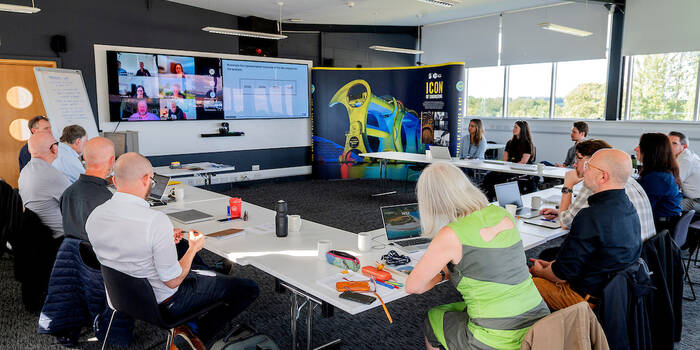
Thursday 10th September 2026. Scottish Canals is working with two globally renowned climate and heritage experts to assess the growing challenges posed by climate change to Scotland’s network of canals.
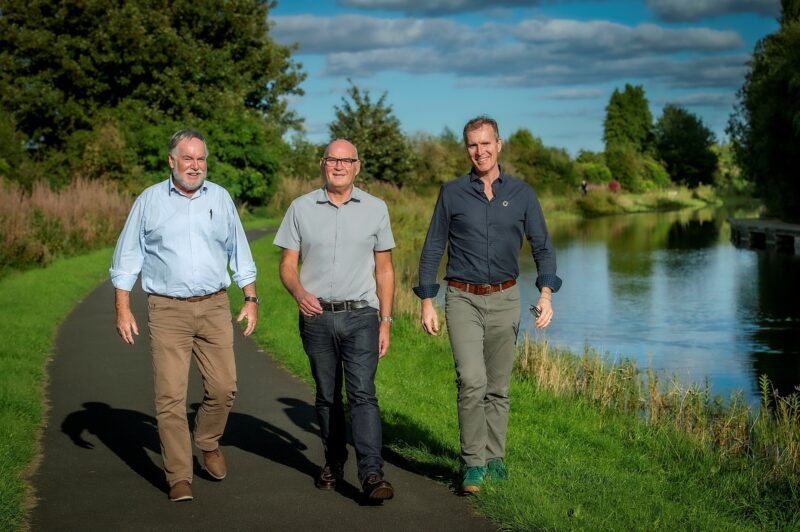
The study is led by Professor Scott Heron, UNESCO Chair on Climate Change Vulnerability of Natural and Cultural Heritage, and Dr Jon Day, a Principal Research Fellow, from Australia’s James Cook University. Both are internationally recognised for developing the Climate Vulnerability Index (CVI), a tool that has now been widely used to rapidly assess the effects of climate change on World Heritage places such as the Great Barrier Reef and the Old and New Towns of Edinburgh.
To date, the CVI assessment process has focussed upon World Heritage sites across Europe, Africa, and Australasia. However, this is the first time a full CVI assessment of the vulnerability of heritage values and the associated community will be undertaken in a non-World Heritage location.
Their latest collaboration, led by Scottish Canals and in partnership with other agencies, is bringing together the local community and representatives of public bodies in a series of discussions to examine the future implications of climate change for the Crinan Canal in Argyll and Bute. From there, it is planned to widen the focus to the entire canal network, across Scotland’s Highlands and Lowlands.
Over the coming week, a workshop at Falkirk will examine not only how climate change would affect the canal itself but will map the knock-on effects for the wider community, local economy and management of water in Argyll and Bute.
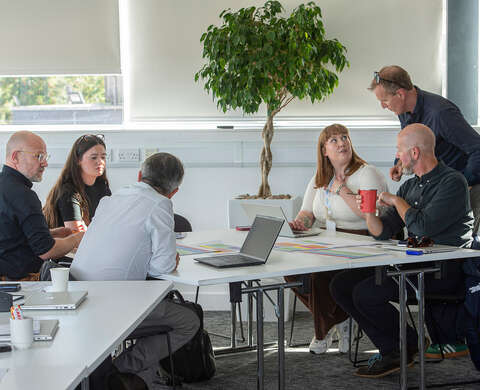
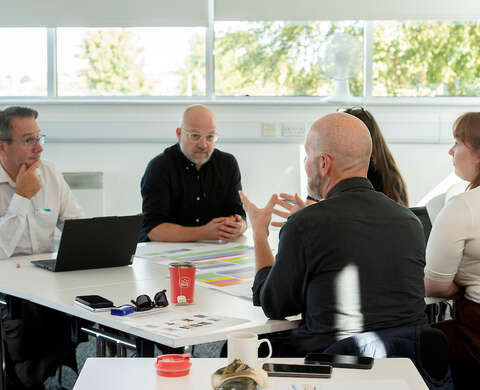
This workshop will include experts in civil engineering, environment, ecology and habitats, local economy, and forestry, water and land management. Last week, in Ardrishaig, input from the local community was captured to feed into the study.
Scottish Canals Heritage Manager Chris O’Connell said: “Scotland’s canals are recognised as Scheduled Monuments because of the contribution they have made to the nation's economic and cultural development as well as being examples of superb Georgian engineering.’’
“It is well-known that the canals are important in driving tourism and economic regeneration, as well as playing a growing and important role in ecology, wellbeing and active travel. Just how much our landscapes and future management of climate change depend upon them – that’s less widely appreciated, and these are among the topics of the research. Once published, our CVI report will join a high profile, global library, creating a strong case for funding and policy focus on our heritage canals.”
“Climate change is the fastest growing global threat to a wide range of heritage places around the world. Many places are already experiencing significant negative impacts and degradation”, said Scott Heron. “As climate change intensifies, the impacts can result in a deterioration or even loss of the values that are significant for these special places.”
For more information, visit: https://www.scottishcanals.co.uk/about-us/maintaining-and-developing-the-canals/our-projects/community-based-study-assesses-future-impacts-of-climate-change-on-the-crinan-canal
If you would like to get in touch with us about this story, contact Amy Needham at amy.needham@scottishcanals.co.uk, 07396669968.

Scottish Canals Marks 25 Years of the Millennium Link with £3.1bn Regeneration Milestone
Twenty-five years on from the Millennium Link, Scotland's canals have driven £3.1 billion of investment and regeneration, according to a new report.
The Falkirk Wheel to light up the night with spectacular new after-dark experience
Scotland’s iconic Falkirk Wheel will be transformed by light, lasers and water this autumn as illumin8 brings a spectacular new after-dark experience to the landmark this September.
Maryhill exhibition brings 240 years of canal engineering history to life
A new exhibition, entitled Every Picture Tells a Story, opened at Maryhill Burgh Halls on Thursday 13th August.