
Community-based study assesses future impacts of climate change on the Crinan Canal
Scottish Canals is launching a major community-based study into future impacts on the Crinan Canal in partnership with the Climate Vulnerability Index (CVI)
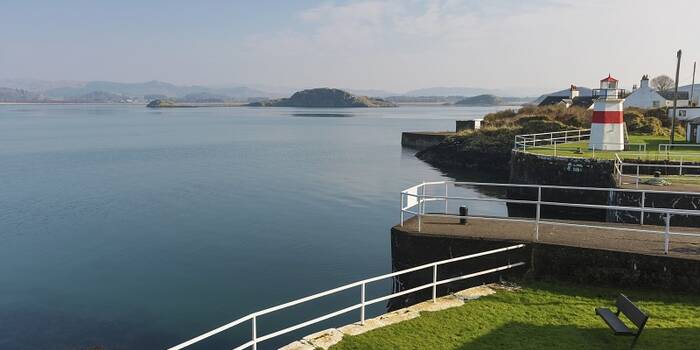
Scotland’s canals were the catalyst for the development of many of our urban centres, local industries and rural settlements. As such, they remain vital infrastructure assets, playing a deeply embedded role in drainage and water management across both Highland and Lowland landscapes.
As custodian of the canal network, Scottish Canals is responsible for anticipating and responding to the future of climate change. Protecting this historic infrastructure means planning for a future shaped by more frequent extreme weather, taking into account the many economic, environmental and social benefits the canals continue to provide.
Our canals are not just heritage assets to be safeguarded, however; they also have an important role to play in helping communities adapt to climate change. By reimagining how the network is used, we can unlock new opportunities to reduce flood risk, manage water more effectively and build resilience.
Glasgow’s Smart Canal is a prime example of how this can work: in a European first, the Forth & Clyde Canal can lower its water levels by four inches across a 20-mile stretch, soaking up surface water and providing additional drainage during extreme weather events. This is just one way that our canals can be utilised in new ways as the needs of our society and landscapes change.
Understanding the potential impacts on the Crinan Canal
In the late summer to autumn of 2026, we are working with the Climate Vulnerability Index (CVI) to conduct a major study into climate change impacts on the Crinan Canal and canalside communities in Argyll.
Using the CVI methodology, which has focussed on World Heritage sites to date, we will produce a report and action plan together with the local community in Argyll. Schools, colleges, businesses, public bodies and residents are being invited to contribute to our workshops in late August and September.
Our study will not just inform our asset management plan, but it will also quantify the potential impacts on the local economy and society of climate change. This means that future investment can be properly prioritised and matched to the needs of the local area. The study is also expected to highlight areas where future research and innovation programmes are needed.
Once this study is completed, we will assess its applicability for the other canals on Scotland’s network.
For more information on the CVI methodology, see https://cvi-heritage.org/.
Community workshops and Heritage Walk – Thursday 27th August, Egg Shed, Ardrishaig
You are welcome to join our first workshop to discover more about heritage and climate change, for more information on the workshop see Our Heritage, Our Future | Keep Scotland Beautiful. If you are short on time that day, there is also the option of a drop-in session of one hour, where Lisa Snedden from Keep Scotland Beautiful will hold an open discussion. Following the workshops, Chris O’Connell, Scottish Canals Heritage Manager, will lead a heritage tour of the Ardrishaig Harbour complex and canal where you can find out more about the canal’s history, engineering and considerations related to climate change.
Timetable for the Day
The sessions are open to everyone, and you can attend any or all of them as best meets your schedule that day.
2.30pm – 4.30pm: Climate Change Workshop, led by Lisa Snedden (Our Heritage, Our Future Coordinator at Keep Scotland Beautiful)
4.30pm – 5.20pm: Drop-In Discussion and Introduction to the CVI, led by Lisa and Chris O’Connell, Scottish Canals Heritage Manager
5.30pm – 6.30pm: Heritage Walk along the Crinan Canal led by Chris
It is helpful if you could let us know you are attending for our planning purposes, but you are also welcome to drop in on the day if you decide last minute. Please contact amy.needham@scottishcanals.co.uk with any questions or for more information too.
Climate Vulnerability Index Workshops at The Falkirk Wheel - 9th to 12th September
The workshops, which are taking place this September at The Falkirk Wheel Lime Road Falkirk FK1 4RS (with dial-in options), will bring together a variety of public bodies and other interested groups and individuals.
The workshops will be led in person by:
- Scott Heron, UNESCO Chair on Climate Change Vulnerability of Natural and Cultural Heritage and Professor in Physics, College of Science and Engineering, James Cook University.
- And Jon Day, Adjunct Principal Research Fellow, College of Science and Engineering, James Cook University
- And Chris O’Connell (Scottish Canals Heritage Manger)
Workshop timetable and catering
The workshop sessions are free, open to everyone and run over three and a half days at The Falkirk Wheel.
Breakfast will be provided at 9am, and the workshops will begin at 9.30am.
Lunch and other refreshments will be provided.
Day One: Wednesday 9th September, from 9am to 4pm
Essential foundations for the entire CVI process and first outputs
Day Two: Thursday 10th September, from 9am to 4pm
Initiate assessment of the Crinan Key Values Vulnerability to climate change
Day Three: Friday 11th September, from 9am to 4pm
Identify potential adaptation strategies in response to climate risks and finalise Key Values Vulnerability assessment; initiate assessment of the Community Vulnerability
Day 4: Sat 12th September, 9am to 12noon
Finalise Community Vulnerability assessment; summary and next steps.
Register to attend
Please contact amy.needham@scottishcanals.co.uk and chris.o’connell@scottishcanals.co.uk with any questions or if you would like to register to attend the workshops. Please indicate if you would like the dial in option, and a link will be provided.
PROJECT LEADS
Chris O’Connell is Scottish Canal’s Heritage Manager and leads activities on the ground in Scotland. He is an experienced archaeologist with a global portfolio of projects. He is also one of the world’s leading experts on canal history and heritage conservation. Chris works alongside our engineering and environmental teams to ensure that canal assets are managed in a way that best preserves our historical legacy.
Working alongside Scottish Canals to deliver this project is Scott Heron, UNESCO Chair on Climate Change Vulnerability of Natural and Cultural Heritage and Professor in Physics, College of Science and Engineering, James Cook University. Scott is one of the world’s foremost researchers into the impacts of climate change on marine ecosystems and co-lead on the development of the CVI.
His co-lead on the project is Jon Day, Adjunct Principal Research Fellow, College of Science and Engineering, James Cook University. Jon has many years of experience in directing conservation projects around the world and served on Australia’s delegation to the World Heritage Committee.
Lisa Snedden is Our Heritage, Our Future Coordinator with Keep Scotland Beautiful. This project looks at the impact that climate change is having on heritage across Scotland by supporting communities to explore, record and protect their heritage through hands-on activities, skills development, and youth learning programmes. Lisa has extensive experience developing and facilitating community-led projects.
Scotland’s first-ever canal and traditional skills centre to be considered by councillors
Councillors will be asked to consider the Full Business Case for one of the Falkirk and Grangemouth Growth Deal’s flagship skills projects.