
Historical find in the Kelvin Aqueduct intrigues canal historians
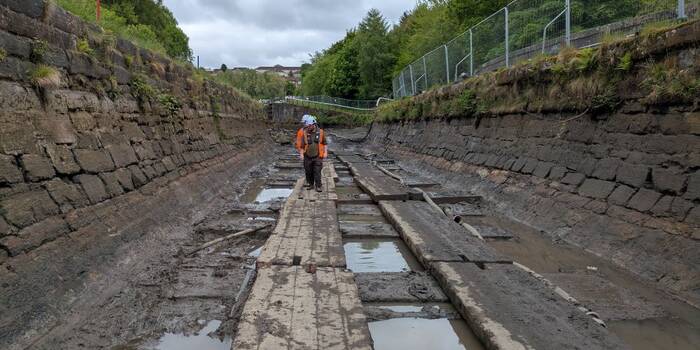
While work continues to investigate and repair a source of leakage from the Kelvin Aqueduct, we have found an intriguing structure at the base of the aqueduct trough...
The Kelvin Aqueduct is one of the most impressive sights on Scotland’s canal network. The structure carries the Forth & Clyde Canal over the River Kelvin in Maryhill, Glasgow, a task it has faithfully fulfilled for more than 236 years.
Built between 1787 and 1790, it was the largest aqueduct in Europe at the time, and it quickly became a popular tourist attraction for those embarking on a Grand Tour of the continent.
While it was under construction, revolution broke out in France, the US Constitution was signed and George Washington elected, Catherine the Great waged war against the Ottoman Empire, and Mozart was in his heyday…
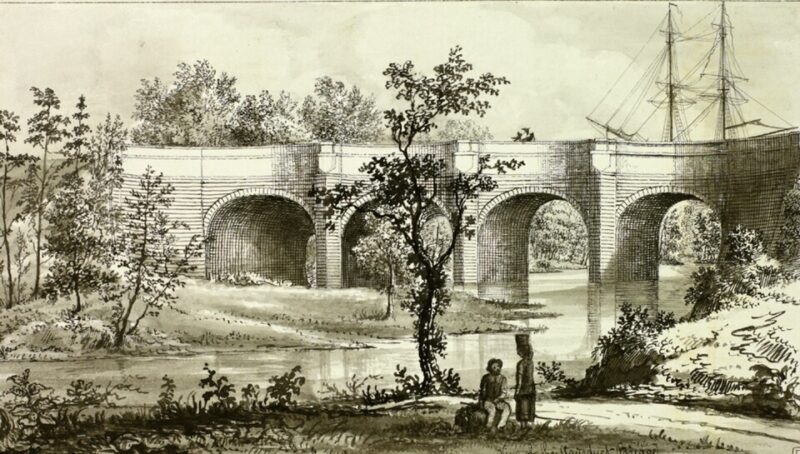
Designed by engineer Robert Whitworth, the aqueduct became the prototype for many more on canals across Scotland (and the world) during the boom years of canal building. It typifies the style of Whitworth, who became known for aqueducts in the West of Scotland, as opposed to those in the East designed by John Smeaton.
As such, it is a highly significant chapter in the story of canal engineering.
Time for a recharge
After such unceasing service, it is no wonder that the aqueduct needs a rest every few hundred years or so. And now is the time: last year, a leak sprung under one of its massive arches, cascading water onto the footpath below, and triggering a major investigation and repair project.
Scottish Canals has been working with contractor Mackenzie Construction since February to discover the source of the leak, mitigate it in the short term, and design a permanent fix.
Senior Project Manager at Scottish Canals Denise Richmond leads the project: “This is one of the most challenging (and interesting) projects we have had at Scottish Canals. The structure itself is immense (you need to look at it from the Kelvin Walkway below to really appreciate the scale!). Added to that is the constant battle with years of accreted silt and ingress of water from upstream, which has proven difficult to contain with temporary dams.
“But the opportunity we have is once in a lifetime: we have the aqueduct’s trough and surrounding canal dewatered, and we are getting an unprecedented view into it. Our intention is to repair and restore – the aqueduct was built well enough to serve for more than two centuries, so our approach will be to use the same materials and design as much as possible.”
This month, Scottish Canals are working with Mott Macdonald and AECOM to investigate and build a 3D map of the aqueduct’s interior, which will form the basis for the design of the long-term repairs. In the interim, the plan is to repair the clay lining of the aqueduct trough, grout the masonry beneath the arch, and clear away water lilies and foliage that have attached themselves to the masonry.”
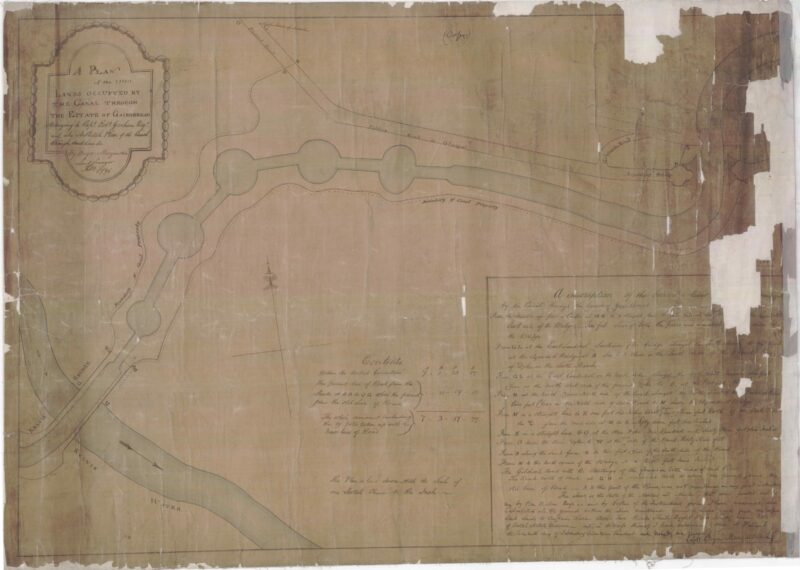
Chris O’Connell, Heritage Manager at Scottish Canals, adds: “Careful logging and 3D mapping are crucial at this stage to understand how the aqueduct was built and the materials used. No technical drawings have survived from the original construction work, so we are learning more about Robert Whitworth’s genius and construction methods as we go. The current works are necessary for the continued operation of the aqueduct and canal, but they are also a gold mine of historic information and finds too.”
Discovery of a wooden ‘suspended floor’
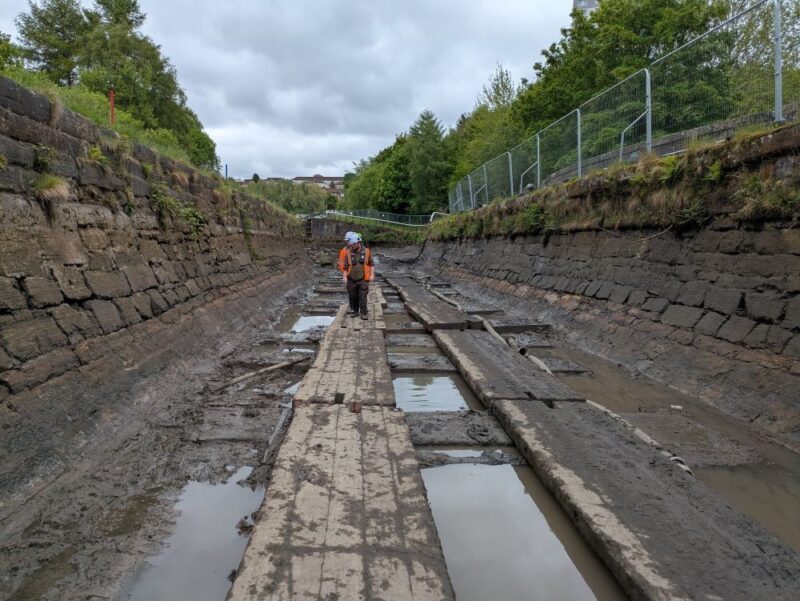
One such find has been a wooden framework on the base of the trough, dating from the canal’s construction.
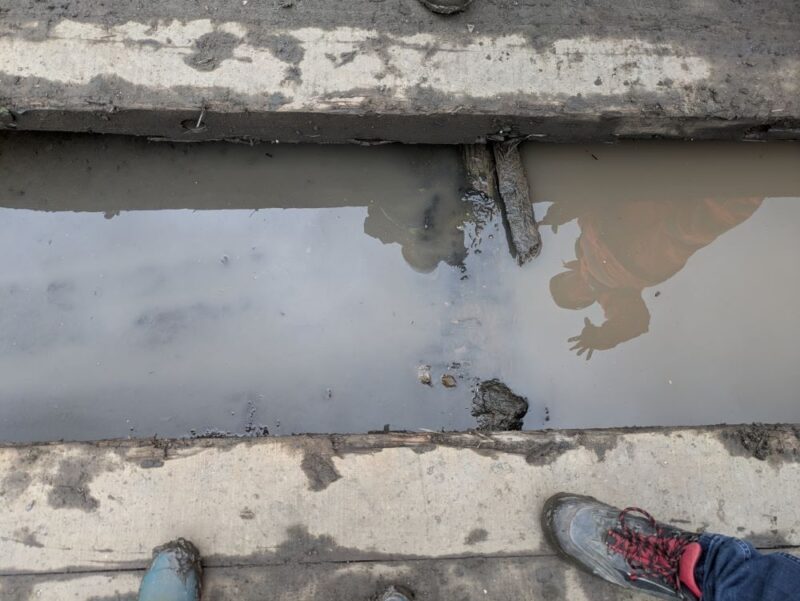
The arrangement of timber framing, planking and puddle clay appears comparable to that within locks on the western reach of the Forth & Clyde Canal. It is likely to have functioned as a raised floor, intended to retain and seal the waterproofing puddle clay, and potentially protect the masonry bed from the keeled sailing ships that navigated the canal during the 18th and early 19th centuries.
“This week is the first opportunity we have had to see the structure clearly with all the water now pumped out of the aqueduct’s trough. The wooden frame and timbers were constructed over the clay like a suspended floor and covering the entirety of the aqueduct’s base, from wall to wall”, comments Chris O’Connell.
The next steps for the project team will be to complete the mapping of the aqueduct while working with Historic Environment Scotland (HES) to record and plan how best to conserve the wooden frame structure. Local history and stonemasonry groups are also invited to attend the site and record the mason’s marks and other features of interest now uncovered.
The find also involves obtaining additional Scheduled Monuments consents for the upcoming repairs, some of which may be covered by Scottish Canals agreement with HES (Section 17) for a simplified consents procedure.
You can find out more about the progress of the Kelvin Aqueduct project on our Ongoing Works page, where we will post updates and photos.
Scottish Canals Technical Tour - IWA Water Congress & Exhibition 2026
A mammoth water industry conference wound up in Glasgow last week. From 4th to 8th October, the IWA World Water Congress & Exhibition brought together delegates from around the world to share knowledge and experience of working with water as a utility, managing waterways, and moving to more sustainable models of water management.